
Insights & Field Notes
Practical knowledge from chemists and supply chain specialists.
Buyer guides, regulatory deep-dives and manufacturing perspectives — the same briefings we share with our procurement clients, published openly.
Navigating the New EU GMP Guidelines for Excipient Imports
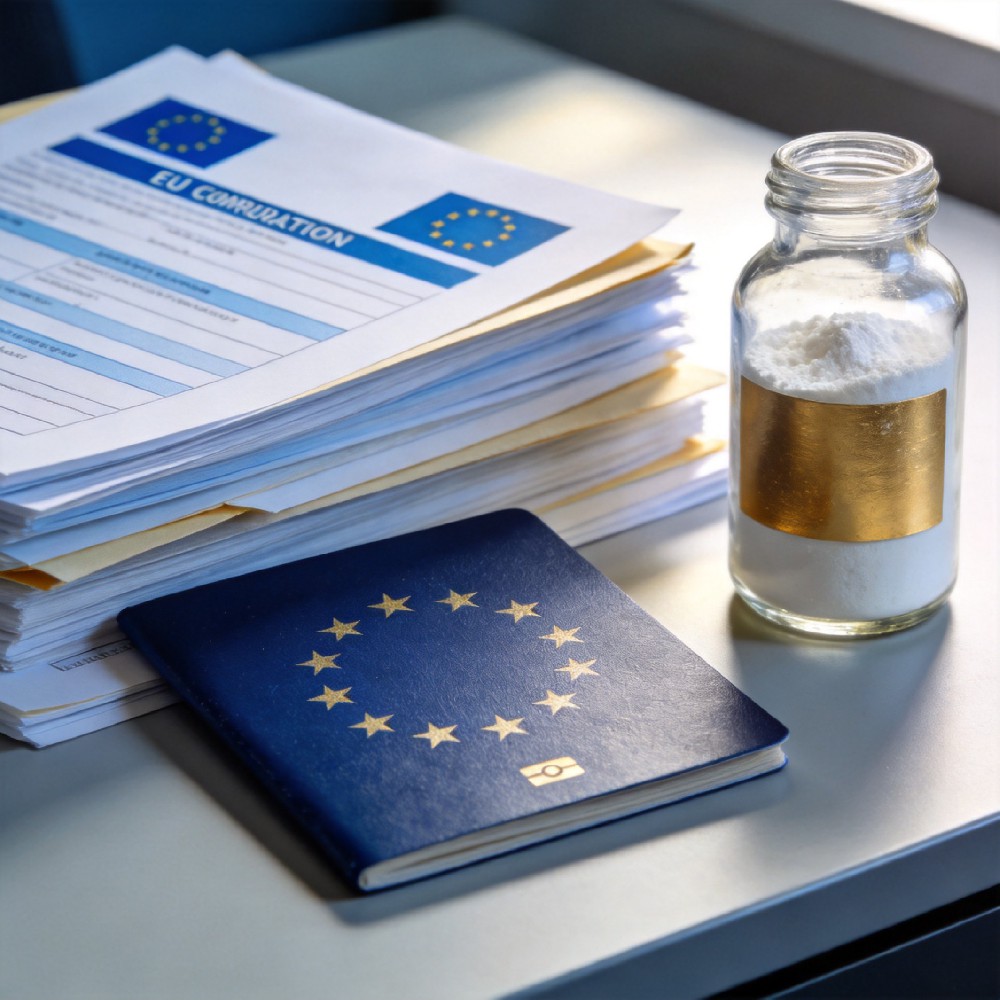
A New Regulatory Landscape for Excipient Importers
The European Medicines Agency (EMA) has published a major revision of Annex 1 of the EU GMP guidelines, which came into full effect in August 2024. For the first time, the guidelines explicitly address the qualification of excipient imports from non-EU countries, requiring importers to demonstrate end-to-end traceability from the raw material source to the finished dosage form.
For importers of pharmaceutical-grade excipients — including MCC, lactose, croscarmellose sodium, and magnesium stearate — this represents a significant shift in compliance burden. The previous "trust-but-verify" model has been replaced by a documented, auditable quality system.
Key Requirements
Under the revised Annex 1, importers must now submit the following documentation for each imported excipient:
A Site Master File (SMF) for the manufacturing facility, updated annually
A full supply-chain map identifying all intermediate processing and reprocessing steps
A formal quality risk assessment (ICH Q9) covering potential contaminants at each node
Evidence of batch-level traceability back to the original raw material supplier
Stability data generated under ICH Q1A conditions for the intended shipping route
Incomplete supply-chain maps — particularly for third-party reprocessing or micronisation
Risk assessments that rely on generic templates rather than facility-specific data
Stability studies that do not account for climatic zone conditions during shipping
Lack of formal change-control notification procedures from the manufacturer to the importer
The SMF requirement is the most impactful. It goes beyond the existing Drug Master File (DMF) by requiring the manufacturer to describe their entire quality system — not just the manufacturing process. This includes deviation management, change control, and supplier qualification procedures.
Common Compliance Gaps
In our experience reviewing compliance packages for EU clients, the most frequently cited deficiencies are:
The good news is that most of these gaps can be closed with a structured compliance programme. FocusNutr works with each of our partner manufacturers to maintain SMFs that meet the new EMA standards, and we provide our clients with full supply-chain documentation as part of our standard quality package.
What This Means for Your Procurement
If you are sourcing excipients for EU-marketed products, your existing supplier qualification process may no longer be sufficient. We recommend conducting a gap analysis against the revised Annex 1 requirements before your next regulatory inspection.
FocusNutr offers a complimentary compliance review for EU-bound excipient imports. Contact our regulatory affairs team to schedule an assessment.