
洞察与实务笔记
来自化学家与供应链专家的实用知识。
采购指南、法规深度解读和制造业视角 — 我们与采购客户分享的简报内容,公开发布。
Functional Food Actives in 2025: Five Ingredients Every Formulator Should Have on Their Radar
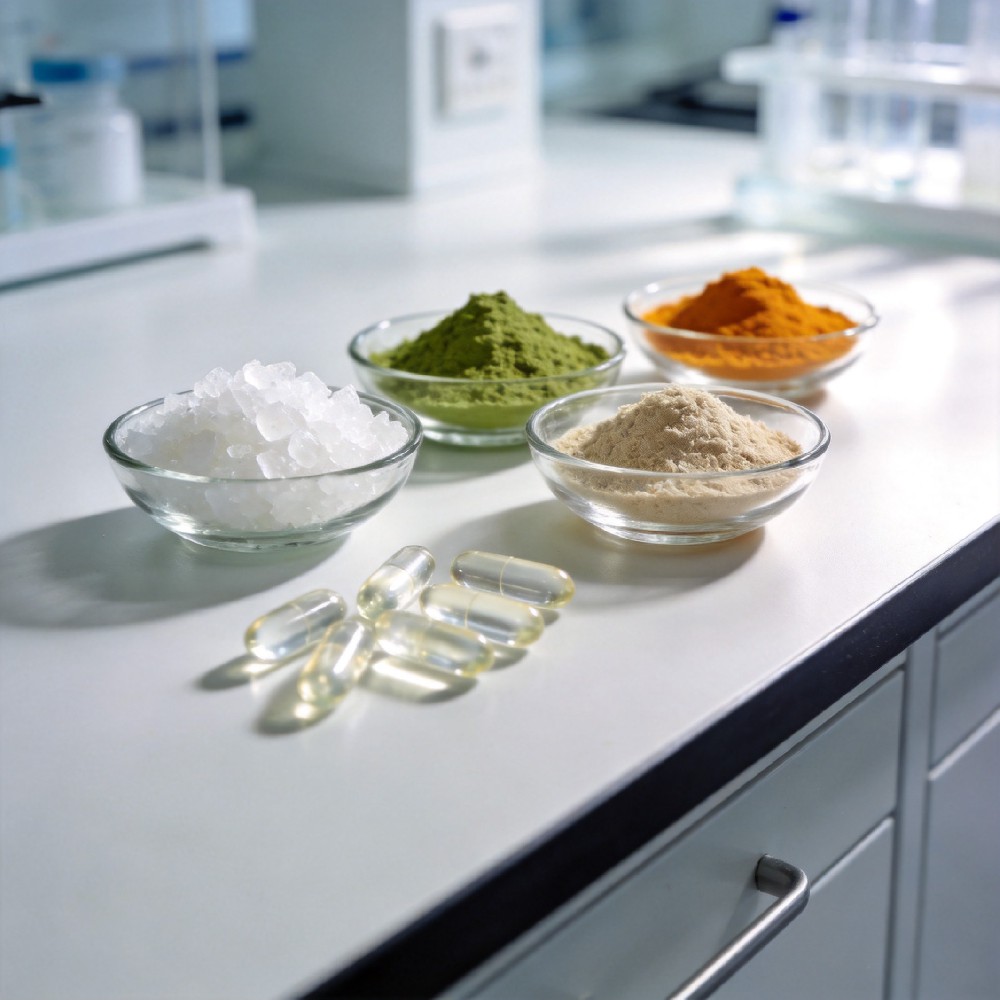
The functional food ingredients landscape is evolving faster than ever. Consumer demand for science-backed health benefits, combined with regulatory shifts in major markets, is driving formulators to explore new actives that deliver both efficacy and clean-label appeal. Here are five ingredients we believe deserve a place on every formulator's 2025 shortlist.
1. Allulose — The Rare Sugar With a Clean Label
Allulose has transitioned from a niche sugar alternative to a mainstream functional active. Unlike other low-calorie sweeteners, allulose is a monosaccharide that occurs naturally in small quantities in figs, raisins, and maple syrup. It provides approximately 70% of the sweetness of sucrose with only 0.4 calories per gram — and, critically, it does not spike blood glucose or insulin levels.
The FDA's exclusion of allulose from added-sugar labelling requirements (announced in 2023) has accelerated adoption across the beverage, confectionery, and dairy categories. Formulators should note that allulose exhibits a negative heat of solution, creating a cooling mouthfeel that works particularly well in mint and citrus applications. It also participates in the Maillard reaction, making it suitable for baked goods where browning is desired.
Sourcing considerations: Commercial allulose is produced via enzymatic conversion of corn or fructose syrup. Most supply originates from China and South Korea, with tightening quality specifications around residual fructose content.
2. Postbiotic Inactivated Yeast Fractions — Gut Health Beyond Probiotics
The gut health market has moved beyond probiotics. Postbiotics — inactivated microbial cells and their metabolites — offer a compelling alternative with superior stability and no viability concerns. Inactivated yeast fractions derived from Saccharomyces cerevisiae have demonstrated the ability to bind and neutralise pathogens in the gastrointestinal tract, support tight-junction integrity, and modulate local immune responses.
Unlike live probiotics, postbiotics can withstand thermal processing, high-pressure homogenisation, and extended shelf life at ambient temperatures. This makes them ideal for baked goods, powdered beverages, and bar formats where probiotic viability has historically been a challenge.
Sourcing considerations: Look for suppliers who provide inactivated yeast fractions with documented beta-glucan content and in vitro binding assay data. Third-party verification of inactivation uniformity is essential.
3. Palmitoylethanolamide (PEA) — The Endocannabinoid System Modulator
PEA is a naturally occurring fatty acid amide with a growing body of clinical evidence supporting its role in managing neuropathic pain, allergic inflammation, and respiratory health. Unlike CBD, PEA is a food-grade ingredient with a well-established safety profile and GRAS (Generally Recognized as Safe) status in the United States.
The European Food Safety Authority (EFSA) has approved health claims for PEA in the context of joint comfort and immune support. Formulators are incorporating PEA into functional beverages, softgels, and gummies, often in combination with curcumin or boswellia for synergistic anti-inflammatory effects.
Sourcing considerations: PEA is highly lipophilic, requiring micronisation or emulsification for optimal bioavailability. Verify that your supplier provides particle size data and dissolution profiles.
4. Resistant Dextrin — Soluble Fibre With Metabolic Benefits
Resistant dextrin, a low-viscosity, highly soluble dietary fibre derived from wheat or corn starch, has become a workhorse ingredient in the functional food space. Its clean taste, excellent water solubility, and high digestibility resistance make it ideal for fortifying beverages, yoghurts, and meal replacements without compromising texture.
Clinical studies have demonstrated that resistant dextrin can improve glycaemic response, support satiety, and promote the growth of beneficial gut microbiota. In Japan, resistant dextrin has been approved as a Foods for Specified Health Uses (FOSHU) ingredient for over a decade, and its global adoption continues to grow.
Sourcing considerations: The degree of polymerisation and branching ratio vary significantly between suppliers. Request supplier-specific dietary fibre assay data (AOAC 2001.03) and viscosity profiles at your target usage level.
5. L-Ergothioneine — The Longevity Antioxidant
L-Ergothioneine (EGT) is a naturally occurring sulphur-containing amino acid with a unique mechanism of action — it is actively transported into cells via the OCTN1 transporter, accumulating in tissues with high oxidative stress such as the liver, kidneys, and ocular lens. Unlike glutathione, which is synthesised intracellularly, EGT must be obtained from the diet or supplementation.
The longevity and cognitive health markets have embraced EGT as a premium active ingredient. It is now found in a range of functional beverages, cognitive health blends, and skincare-nutrition crossover products. The recommended daily intake of 5–10 mg is achievable at relatively low cost-in-use, making EGT accessible for mainstream product formats.
Sourcing considerations: EGT is produced via fermentation using Mushroom-derived or synthetic pathways. Verify batch-to-batch consistency via HPLC purity analysis and request heavy-metal screening data, particularly for cadmium and lead.
Building Your 2025 Ingredient Portfolio
The common thread across these five ingredients is that they deliver measurable, science-backed health benefits while meeting the clean-label expectations of today's consumers. Each has a clear regulatory pathway in major markets, and each is available in commercial quantities with established supply chains.
At FocusNutr, we maintain a curated portfolio of functional food actives, each with full documentation including certificates of analysis, stability data, and regulatory dossiers. If you would like to explore any of these ingredients for your next product development project, our technical team is ready to assist.